Moving from Project to Product Ownership for your Cross-Org Initiatives
Cross-org initiatives are strategic bets, but traditional project management consistently fails them. What product-oriented initiative ownership looks like — and why it applies even to non-product transformations.
 Click image to open full size
 How do you manage your cross-organization initiatives?
These are some of the most complex endeavors companies take on. They represent major strategic bets, yet they are notoriously frustrating to manage. Often, the pain of tracking these massive dependencies leads leadership to bring in heavy project management. They apply tight control, try to lock down scope, and introduce friction-heavy processes like change control boards. While this creates an illusion of control and tracking against a Gantt chart, the actual flow of value stalls.
We know from decades of product development that managing complex problems requires empirical steering, not heavier up-front planning. The plan becomes useless the moment reality hits. The way to improve your odds is to shift from managing projects to managing products.
Instead of tracking activities and deliverables, you focus on managing work in flight and steering based on real feedback. The trick is that this product thinking applies far beyond classic software development. Moving your business from perpetual licenses to subscriptions? Treat it as a product designed to change behaviors. Adopting a new talent acquisition system or shifting from bespoke consulting to a product foundation? Same rules apply.
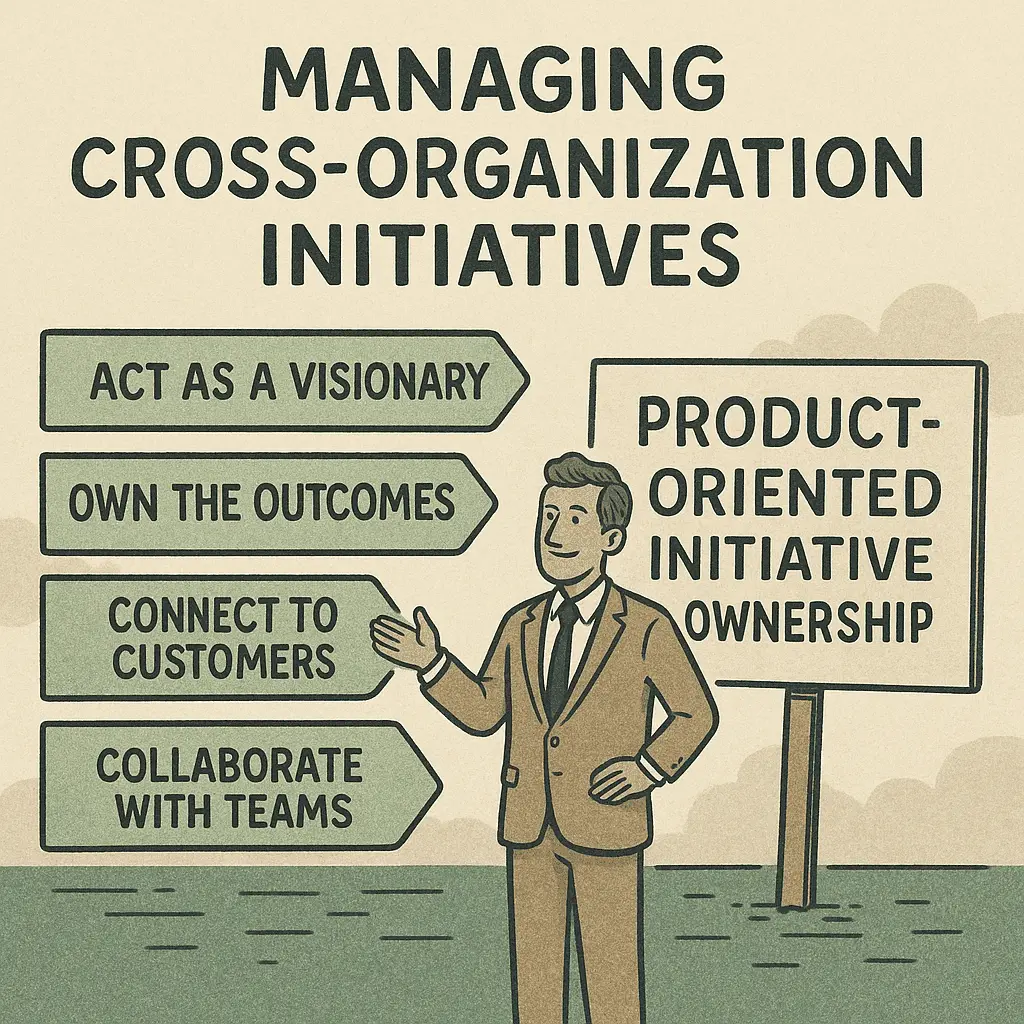
When you tackle initiatives this way, you need Product-oriented Initiative Ownership. The people running the initiative stop acting like task trackers and start acting like Product Owners. They focus on the actual constraints in the system. They own the strategic direction, collaborate across teams to find creative ways to test assumptions, and make decisions that unblock flow. Most importantly, they limit work in progress and create discovery loops that provide real opportunities to inspect, adapt, or kill an initiative early.
You might say they act like Professional Scrum Product Owners, applying the discipline of empirical process control to the enterprise level.
A free email series on building an organization that reliably converts strategy into outcomes — without the coordination overhead.
Yuval Yeret helps product and tech leaders move from agile theater to evidence-informed delivery. Work with Yuval →